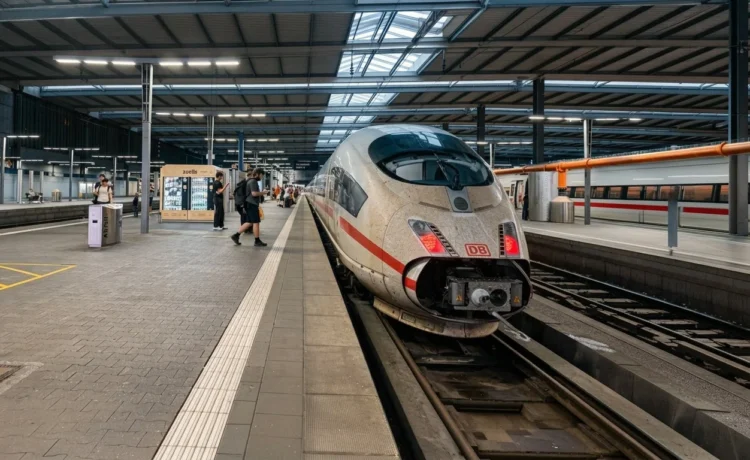
Every train in Germany stopped on Tuesday night. Not because of a cyberattack, not because of a strike, but because a single radio communications system failed and Deutsche Bahn had no way to keep running without it.
The system that failed is GSM-R, the dedicated mobile radio network that German rail operators use for train-to-control communications. According to The Record, the outage began late Tuesday and affected both long-distance services and S-Bahn commuter lines. Deutsche Bahn confirmed services resumed after engineers resolved the fault, though the company warned passengers to expect continuing delays and cancellations into the following day.
“Our IT experts worked tirelessly to resolve the issue, successfully,” Deutsche Bahn said in a statement.
One System, No Redundancy, No Trains
GSM-R is not peripheral infrastructure. It is the communications backbone that allows drivers to receive instructions, signal controllers to authorize train movements and dispatchers to coordinate the network in real time. Without it, Deutsche Bahn’s safety protocols do not permit trains to move. The BBC reported that the outage brought the rail network to a complete halt nationwide.
The Independent subsequently reported that Deutsche Bahn attributed the failure to its own workers, though the company has not publicly detailed what went wrong at a technical level. Security Affairs noted that during the outage period, neither Deutsche Bahn nor external observers could immediately identify the root cause which is itself a significant operational problem for a safety-critical network.
No cybersecurity incident was indicated. This was not an attack.
The Security Problem Is Availability, Not Confidentiality
The incident exposes something that infrastructure security conversations often miss. The CIA triad teaches confidentiality, integrity and availability as equal pillars. In practice, most security investment goes into preventing unauthorized access. Availability, particularly for operational technology networks, gets less attention until a failure like this makes the cost visible.
GSM-R was designed as the European standard for railway radio communications precisely because interoperability and reliability were paramount. A single points-of-failure event that takes down an entire national rail network suggests the resilience architecture around that system did not match its criticality. Whether the root cause was a configuration error, a hardware fault or a procedural mistake by staff, the outcome was the same, Germany’s trains stopped moving.
This is the kind of incident ENISA and CISA have been flagging in their critical infrastructure assessments for years. Availability failures in transportation OT environments do not need a threat actor. They just need one dependency with no fallback.
Sweden Is Running the Same Architecture
Trafikverket, the Swedish Transport Administration, operates GSM-R across the Swedish rail network. The same architecture, the same single-system dependency. Sweden is also in the process of planning migration toward the next-generation FRMCS standard but that transition is years from completion on most lines.
The Deutsche Bahn failure is therefore directly relevant to Swedish rail resilience planning. If Trafikverket’s GSM-R network experienced a comparable fault, the operational outcome would likely be identical, trains stopped, no quick manual workaround, passengers stranded while engineers diagnose a system most commuters have never heard of.
MSB’s critical infrastructure guidance addresses dependency mapping and resilience requirements for transport operators but guidance and tested fallback capability are different things. The question Swedish rail operators should be answering this week is not whether their GSM-R network is secure from attack. It is whether it can fail gracefully and what the recovery procedure looks like when it does not.
References
- German Rail Services Resume After Wireless Communications Outage
- Germany Went Off the Rails as Wireless Outage Saw All Trains Cancelled
- German Train Operator Says Workers to Blame for Nationwide Outage
- Germany Rail Network Comes to Complete Halt Nationwide Due to IT Malfunction
- One Railway Radio Outage Stopped Trains Across Germany and Nobody Knew Why
- Trains Resume After Radio Issue Resolved, Deutsche Bahn Says
This post is also available in:
 Svenska