Executive Summary
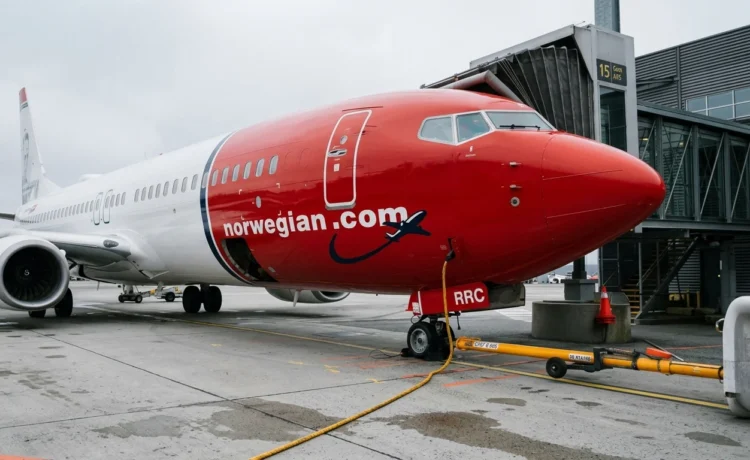
A Norwegian Air data breach at an outside IT supplier exposed the payment cards of about 5,000 customers, the airline said on 19 November 2026. Malicious code ran on some of Norwegian Air Shuttle’s websites during the afternoon and evening of 16 November and may have exposed the card number, expiry date and CVC customers entered when booking. Norwegian found out on 18 November, switched off the affected technology and reported the incident to Datatilsynet, Norway’s data protection authority. Affected customers, Swedes among them, have been emailed and told to block their cards. Norwegian says its mobile app and own servers were not hit. Norwegian hasn’t named the supplier, whose incident it says touched around 200 companies worldwide.
Norwegian Air Data Breach Came Through a Website Supplier
Eline Hyggen Skari, Norwegian’s press chief, said one of the airline’s external IT suppliers had been attacked and that the attack reached some of Norwegian’s web pages. The code was live for a limited window on Monday afternoon and evening. Card details used on certain Norwegian sites in that period may have been exposed, the airline wrote to customers.
The email calls blocking the card the only and most effective step against misuse. Existing bookings and planned trips stay valid. Norwegian also says booking on its sites is safe again.
Optimizely Scripts Carried a Card Skimmer the Same Afternoon
Nothing published so far ties Norwegian’s incident to a named supplier. The timing does overlap with a documented attack. On 16 November an attacker exploited a vulnerability in Optimizely Web Experimentation to add malicious JavaScript to customer projects, Optimizely confirmed on its status page. The product is a script companies load on their websites to test different page versions. Report URI, the firm that found the injection, checked 1,611 Optimizely snippets and found 188 infected across 178 organisations. A card skimmer was added at 13:43 UTC (14:43 in Oslo). It read card numbers, expiry dates and CVVs typed into a site’s own form fields; cards entered in hosted payment frames such as Stripe or Adyen were out of its reach.
Norwegian’s domains are not on Report URI’s published list. The firm says the real count is likely higher because it could only check snippets it found in time. Nordic names on the list include gambling company Betsson, Finland’s S-Pankki, Denmark’s AKA unemployment fund and Norway’s Flytte.no.
All infected Optimizely files were clean by 23:11 UTC that night, Report URI said.
Swedish Customers Among the 5,000
Charlotte Holmbergh, Norwegian’s head of Sweden, confirmed that customers in Sweden were caught up in the Norwegian Air data breach. She couldn’t say how many.
Under Article 33 of the GDPR, a controller must notify its supervisory authority within 72 hours of becoming aware of a personal data breach where feasible. Norwegian learned of the attack on 18 November and had reported it to Datatilsynet by the following evening.
This is the second supplier incident to reach Norwegian customers this autumn. According to a published report, Norwegian told Datatilsynet that data on 144,249 Norwegian and Widerøe passengers was exposed in the breach at booking-system provider Amadeus, which the airline became aware of on 27 October. Norwegian’s Transparency Act report for 2025 counts around 2,270 active suppliers out of roughly 13,700 in its supplier database. That report deals with human rights and working conditions, not IT security.
Supplier, Pages and Fraud Figures Still Unconfirmed
Norwegian has not said which supplier was breached, which of its national websites ran the code or how the supplier was compromised. It gave no count of Swedish customers and hasn’t said whether any of the 5,000 cards have been used fraudulently. No threat actor has been named.
Other Nordic Site Owners Are Waiting on One Name
The supplier’s identity is the detail with the widest reach. Norwegian puts the number of companies touched at around 200, against the 178 Report URI could confirm for Optimizely. If the supplier is Optimizely, Report URI’s advice to its customers is to inspect every project’s custom JavaScript and change history and to treat cards typed into their own forms on 16 November as exposed. A Nordic site absent from that list has no way to know whether the advice applies to it until Norwegian or its supplier names the company.
References
- Optimizely Service Status: Web Experimentation Security Incident
- World’s Largest Brands Infected With Malware Via Optimizely
- Transparency Act due diligence report 2025
- Article 33, Regulation (EU) 2016/679
- Published report
This post is also available in:
 Svenska