Executive Summary
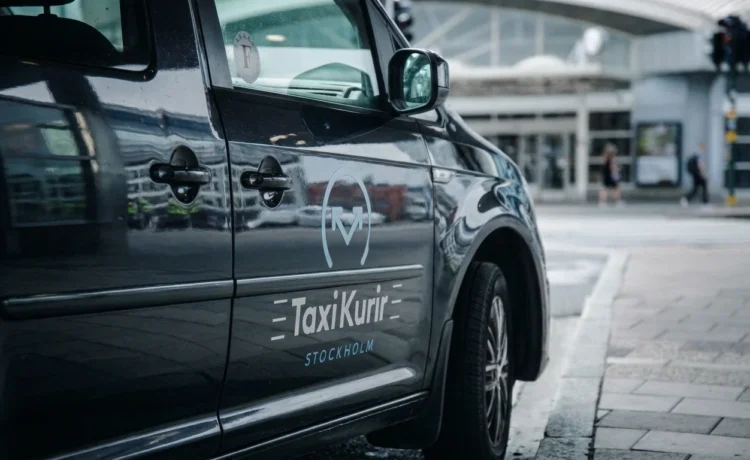
The Cabonline data breach, disclosed on 19 November 2026, exposed customer booking data held by one of the Nordic taxi network’s system suppliers. Cabonline’s app books cars from TaxiKurir, Sverigetaxi and other operators. The company said the exposed details may include names, phone numbers, email addresses, trip history, pick-up and drop-off addresses and some payment information. It said no passwords or bank account details were reached and that the data cannot be used to make unauthorised payments. The access route has been closed. Cabonline has reported the incident to the Swedish Authority for Privacy Protection (IMY) and the police and has warned affected customers.
How the Cabonline Data Breach Happened
The intrusion took place at a supplier. On its incident page, Cabonline said an unauthorised party at one of its system suppliers had accessed some travellers’ booking details containing personal data. Which details were exposed varies from customer to customer, the company said.
Cabonline also said it had found signs that the intruder tried to pass some of the data on to other unauthorised parties. It has no indication that this happened.
The supplier has not been named.
Customers Told to Watch for Fake Messages
Cabonline’s assessment is that customers don’t need to take any particular steps. It has asked them to treat unexpected calls, texts and emails that claim to come from the company with caution. Booking data of this kind makes phishing more convincing. Working with its security expert and the supplier concerned, Cabonline said its priority is to establish exactly what happened and which information is involved. That technical investigation was still running when the breach was made public.
The reach could be wider than Sweden. According to the company’s App Store listing, the Cabonline app books taxis in Sweden, Finland, Denmark and Norway with one app. Cabonline hasn’t said whether customers outside Sweden are among those affected.
A 72-Hour Reporting Duty Under the GDPR
Article 33 of the GDPR requires a controller to report a personal data breach to the supervisory authority within 72 hours of becoming aware of it. Cabonline has filed that report with IMY and has also reported the incident to the police. It hasn’t said when it first learned of the breach. Without that date the gap between detection and disclosure can’t be measured.
Supplier, Customer Count and Entry Point Unknown
Several basic facts about the Cabonline data breach are missing as of 20 November. Cabonline gave no figure for how many customers are affected and hasn’t named the supplier. Nor has it said how the intruder got in, when the access began or what the payment information consists of beyond the statement that it cannot be used for payments.
IMY Has Fined a Supplier Before
Swedish regulators have dealt with this pattern recently. In September 2026 IMY fined the system supplier Miljödata in Karlskrona 1.8 million kronor after a 2025 intrusion exposed personal data on a large part of the Swedish population. IMY found the supplier lacked automatic real-time monitoring to detect intrusions. The GDPR’s Article 32 security duty applies to processors as well as controllers. The unnamed supplier’s own controls are therefore open to the same kind of review.
References
This post is also available in:
 Svenska