Executive Summary
The CERT-SE phishing warning published on 17 November 2026 says Sweden’s national CSIRT, part of the National Cyber Security Centre (NCSC), has seen several phishing campaigns aimed at organisations in Sweden. Both the emails and the pages they link to can look credible, CERT-SE says. Its examples are a fake login page, a link to a supposed PDF invoice and a link to a file shared through a cloud service. Attackers often use legitimate services as the first step and the sign-in flows can closely resemble real ones. CERT-SE hasn’t named the campaigns, the sectors targeted or any affected organisation. It recommends MFA, checking sender and URL before clicking and passkeys or physical security keys where possible.
Phishing Campaigns First Flagged on 13 November
The 17 November notice wasn’t the first sign.
CERT-SE’s weekly newsletter for week 46, published four days earlier, had already reported several phishing campaigns against Swedish organisations and asked readers to take care with links and attachments.
The newsletter was more specific on authentication. It called for MFA and a well-considered password policy for all staff. It also told organisations to consider phishing-resistant MFA for what needs the most protection.
Fake Invoices and Copied Sign-In Flows
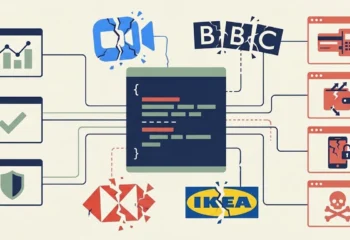
The CERT-SE phishing warning carries screenshots of three lures. In the first the recipient lands on a fake login page. The second asks them to click a link to open an invoice in PDF format. The third points to a file supposedly shared through a cloud service. According to CERT-SE, legitimate services are used as an opening step before the user is steered to the threat actor’s phishing page to sign in with their own credentials. The agency says the flow often mimics real sign-in sequences. That makes a fake page hard to tell from the genuine one.
Passkeys and Hardware Keys Where Possible
CERT-SE recommends two-step verification or MFA. Staff should be told to check the sender and the URL before clicking, it says. Where possible it advises passkeys such as face recognition or a physical security key.
For administrators the notice points to email security guidance CERT-SE published on 19 March 2026. That guidance asks organisations to enable SPF on every domain they manage including domains never used to send email. It also recommends DMARC, first in monitor mode, before deciding whether blocking is needed.
CERT-SE wants suspected phishing attempts reported to the police. Organisations needing urgent help can call its 24-hour line on 010-382 80 00 or email cert@cert.se. The March guidance still lists an older number, 010-240 40 40.
CERT-SE Described a Similar Lure in June 2024
A CERT-SE notice from 13 June 2024 covered a campaign against Swedish municipalities and schools in which emails linked to shared documents in SharePoint, OneNote and OneDrive. Those documents pointed onward to a fake login portal on an external server. Scanning tools didn’t always catch it because the first link was legitimate.
CERT-SE’s advice then went beyond new passwords and MFA. It told affected organisations to look for signs of session or cookie hijacking and to check whether mail rules or authentication methods had changed. The same notice described phishing as a way to gain initial access before other attacks such as ransomware, the route set out in this guide to phishing. The 2026 notice doesn’t link the new campaigns to the 2024 one.
No Sectors or Victims Named So Far
As of 19 November CERT-SE had not said how many campaigns it has seen which sectors are targeted or which legitimate services are abused. It gave no indication whether any organisation lost credentials or had accounts taken over. No indicators of compromise were published with the notice and no threat actor has been named.
MFA Is the Floor in CERT-SE’s Advice
Read together, the three CERT-SE texts rank the controls. Ordinary MFA is the baseline in both the week 46 newsletter and the 17 November notice. For the most sensitive access the agency names phishing-resistant MFA, meaning passkeys or hardware keys. Its June 2024 advice for a similar lure didn’t stop at MFA either; it sent victims looking for hijacked sessions and altered mail rules. Under Cybersäkerhetslagen (SFS 2025:1506), entities in scope must give an initial notification of a significant incident within 24 hours of becoming aware of it.
References
- Uppmaning till ökad vaksamhet efter flera fall av nätfiske
- NCSC – CERT-SE veckobrev v.46
- Råd kring säkerhet i e-post
- Pågående nätfiskekampanj riktad mot kommuner och skolor
- MCFFS 2026:8, föreskrifter om incidentrapportering enligt cybersäkerhetslagen
This post is also available in:
 Svenska