
Responsible AI in Security, Defined
Responsible AI in security means using and building AI systems in your security programme so they stay accountable, fair, transparent, secure and under meaningful human control. It has two sides. You use AI responsibly inside your defences and you secure the AI systems themselves against misuse and attack.
AI is already inside most security teams. It scores alerts, drafts queries and summarises threat reports and it sits in the wider business through everyday chatbots and copilots. In most organisations adoption has run ahead of governance and that gap is where the risk lives.
Two years ago this was a research subject. Now it is a duty. The EU AI Act sets binding rules on how AI may be used and boards are already personally accountable for security decisions under Sweden’s new cybersecurity law. Responsible AI has moved from principle to compliance.
How AI Is Used in Security
Security teams see far more alerts than people can read. AI earns its place by sorting that flood and it now runs right across the stack.
- Detection and Response: Models score network and endpoint activity and surface the events worth a person’s time, the basis of AI detection and response (AIDR).
- Alert Triage: Assistants group, rank and summarise alerts so analysts start with the few that matter.
- Threat Intelligence: Models condense long reports and malware behaviour into something an analyst can act on quickly.
- Copilots: Chat assistants draft detection queries, explain logs and write first-pass incident notes.
- Phishing and Fraud Checks: Classifiers flag suspicious mail and unusual transactions before a human looks.
The same tools sit on the other side of the fence. Attackers use AI to write cleaner phishing, clone voices and build malware faster which our other guides cover. AI became normal in defence because capable models turned cheap, vendors wired them into products and the alert overload made the help welcome. Normal tools still need governance.
The Risks of Using AI in Security
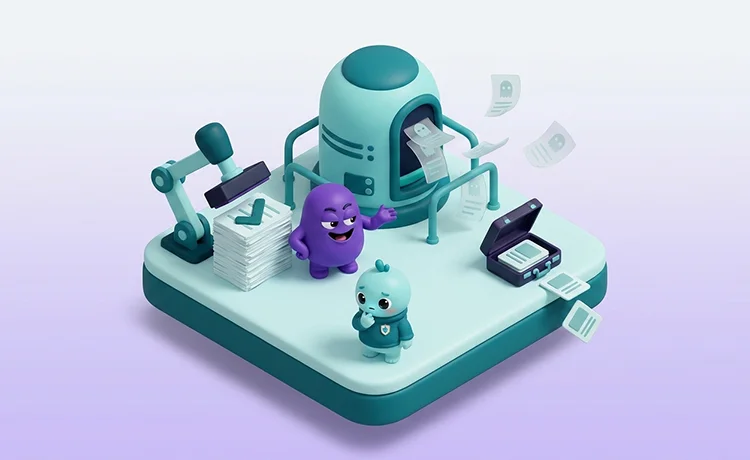
AI helps and it brings its own failure modes. These are the ones that matter in a security setting.
- Automation Bias: People trust a confident machine and stop checking so a wrong call gets waved through.
- Hallucination: Models state false things fluently from invented sources to a mistaken reading of a log.
- Data Leakage: Staff paste confidential data into public tools that may retain it or train on it.
- Shadow AI: Teams adopt AI tools with no approval, no inventory and no oversight.
- Prompt Injection: Hidden instructions buried in data can hijack how an AI assistant behaves.
- Bias and Unfair Outcomes: A model trained on skewed data makes skewed decisions which matters most when AI touches people.
- Opacity: A model that cannot explain why it blocked or allowed something is hard to audit or defend.
- The AI Attack Surface: The model, its training data and its interfaces are themselves targets through data poisoning and model theft.
Each of these has a control and the sections that follow set them out. AI is powerful but easy to mislead so the guardrails are yours to put in place.
Business Impact
The clearest cost is regulatory. The EU AI Act allows fines up to €35 million or 7 percent of global annual turnover for using prohibited AI and up to €15 million or 3 percent for other breaches. Where AI makes decisions about people, GDPR adds a second layer of exposure.
Then there is the breach path. Confidential data fed into an ungoverned tool can end up outside your control and if personal data is involved that becomes a reportable incident under GDPR and Sweden’s cybersecurity law.
AI that acts without oversight can act wrongly at scale. An auto-close rule that buries a real alert or an assistant that blocks legitimate traffic, turns a helpful tool into an outage or a missed intrusion.
There is reputational and legal cost on top. When an AI system misleads a customer or produces a biased decision, the organisation owns the outcome, not the software vendor. That principle is now being tested in real disputes.
Real-World Cases
The failures already on record are not exotic. They are ordinary tools used without guardrails.
Samsung and the Leaked Source Code
In April 2023 engineers in Samsung’s semiconductor division pasted confidential source code and internal meeting notes into ChatGPT while trying to fix and summarise their own work. The data left the company’s control the moment it was submitted.
Within weeks Samsung restricted staff use of public generative AI tools on company devices (Bloomberg, 2023). The control is an approved-tools policy backed by a private or enterprise AI option that does not train on your data, plus a clear rule on what may ever be entered.
The Fabricated Cases in Mata v. Avianca
A New York lawyer used ChatGPT for legal research and filed a brief citing six court cases that did not exist. The model had invented them complete with quotations and citations.
In June 2023 the court sanctioned the lawyers and fined them 5,000 dollars (US District Court, Southern District of New York, 2023). One habit would have caught it. Check every AI-supplied fact, citation or figure against the primary source before it leaves your hands.
Air Canada and Its Chatbot
Air Canada’s website chatbot gave a passenger incorrect information about bereavement fares. When he claimed the refund the airline refused arguing the chatbot was a separate entity responsible for its own words.
In February 2024 a Canadian tribunal rejected that argument and held the airline liable (British Columbia Civil Resolution Tribunal, 2024). The lesson is ownership. Constrain what a customer-facing model can say, ground it in a checked source of truth and test it before it goes live.
Responsible AI and Compliance
Responsible AI is no longer only good practice. Several regimes now make parts of it a duty for any organisation operating in Sweden and the EU.
The EU AI Act (Regulation (EU) 2024/1689) classifies AI by risk, from prohibited uses through high-risk systems to limited and minimal risk. It entered into force on 1 August 2024. Rules on prohibited practices have applied since 2 February 2025 and most obligations for high-risk systems apply from 2 August 2026. High-risk duties include risk management, data governance, logging, transparency and human oversight.
NIS2 and Cybersäkerhetslagen. NIS2 is transposed into Swedish law as Cybersäkerhetslagen (SFS 2025:1506), in force since 15 January 2026. Article 21 requires security measures including continuous monitoring and awareness training and Article 20 makes the management body accountable and personally liable for oversight. A serious incident is reported to MCF (formerly MSB) with an early warning within 24 hours and a full notification within 72 hours. If you run AI in your defences, it sits inside these measures. See our guide to NIS2 in Sweden.
GDPR. Where AI makes decisions about people, data protection law applies. Article 22 gives individuals the right not to be subject to a solely automated decision that has legal or similarly significant effects and Article 33 requires breach notification to IMY within 72 hours. See our guide to GDPR compliance.
DORA. For banks, insurers and other financial entities, DORA (Article 17) governs ICT incident management and is supervised by Finansinspektionen. AI used in a financial firm’s security or operations falls within that ICT risk scope. See our guide to DORA compliance.
Standards. Two voluntary standards give you a governance backbone. ISO/IEC 42001, published in 2023, is the first management-system standard built for AI. The NIST AI Risk Management Framework, released in 2023, offers a practical structure for identifying and controlling AI risk. Certifying against a recognised standard also strengthens your ISO 27001 programme.
The Principles of Responsible AI
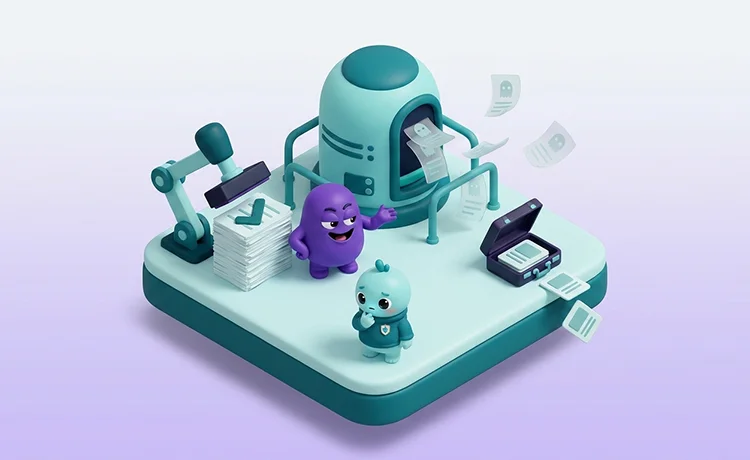
Most responsible-AI frameworks including the OECD AI Principles and the NIST AI Risk Management Framework, converge on the same handful of ideas. In a security setting they read like this.
- Accountability: A named person owns each AI system and answers for its outcomes.
- Transparency: You can explain, at least in outline, how a system reaches its decisions.
- Fairness: The system does not produce biased outcomes for the people it affects.
- Privacy and Security: The data is protected and the model itself is defended against attack.
- Human Oversight: A person can review, question and override any consequential decision.
- Reliability and Safety: The system performs as intended and fails safely when it does not.
Principles are the easy part. They only change behaviour when each one has a named owner, a concrete control and a way to check it is working. A principle with none of those attached has no effect on how the system behaves.
How to Use AI Responsibly
Responsible AI is mostly ordinary governance applied to a new kind of tool. Split the work across people, process and technology.
Start with people. Write a short AI acceptable-use policy that says which tools are approved and what data must never go into a public model. Then train the staff who will actually use AI so they can sanity-check an answer and notice when a tool is guessing.
Put process around consequential decisions. Keep a person in the loop wherever an AI action could block traffic, close an alert or affect someone. Log AI use so you can audit it later. Inventory every AI tool in the business, approved or not, so shadow AI has nowhere to hide.
On the technology side, choose tools that keep your data under your control and do not train on it with Swedish or EU data residency where it matters. Test a model for bias and for prompt injection before you trust it and defend the model and its data as you would any other critical asset.
- Approve a short list of AI tools and rule out the rest.
- Define exactly what data may enter each approved tool.
- Require human review for any AI decision that blocks, deletes or affects a person.
- Log and monitor AI activity across the business.
- Inventory all AI in use, then close the gaps you find.
- Align your controls to ISO/IEC 42001 and the NIST AI Risk Management Framework.
Used well, AI makes a small security team faster and sharper. Used without guardrails, it just helps you make mistakes at machine speed. The difference between the two is governance and it is yours to build.